






Market Lane seeks to rid the typical office ideologies of structure, efficiency, organisation and controlled environments, and looks to a polycentric office model which takes a more people centred approach.
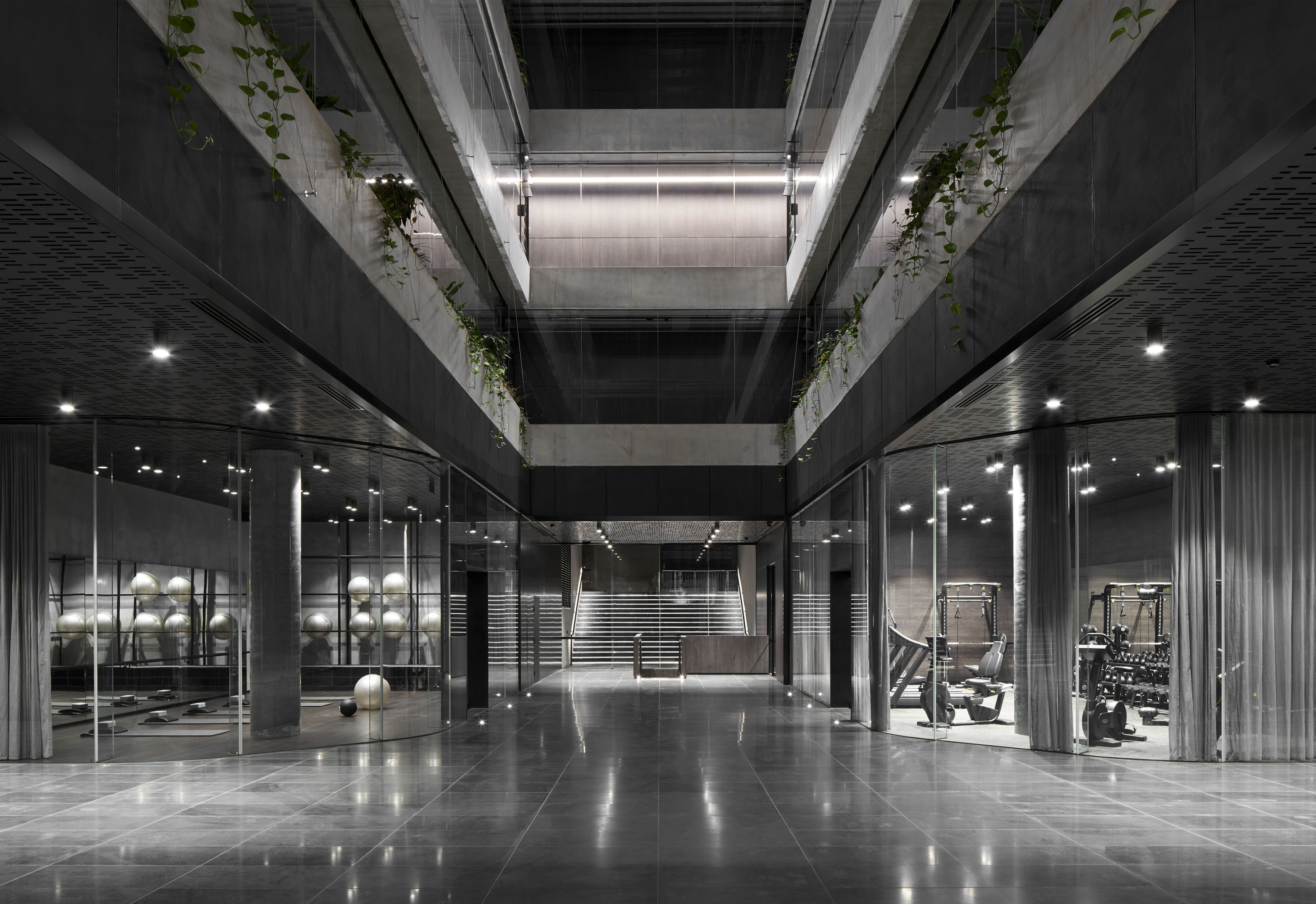
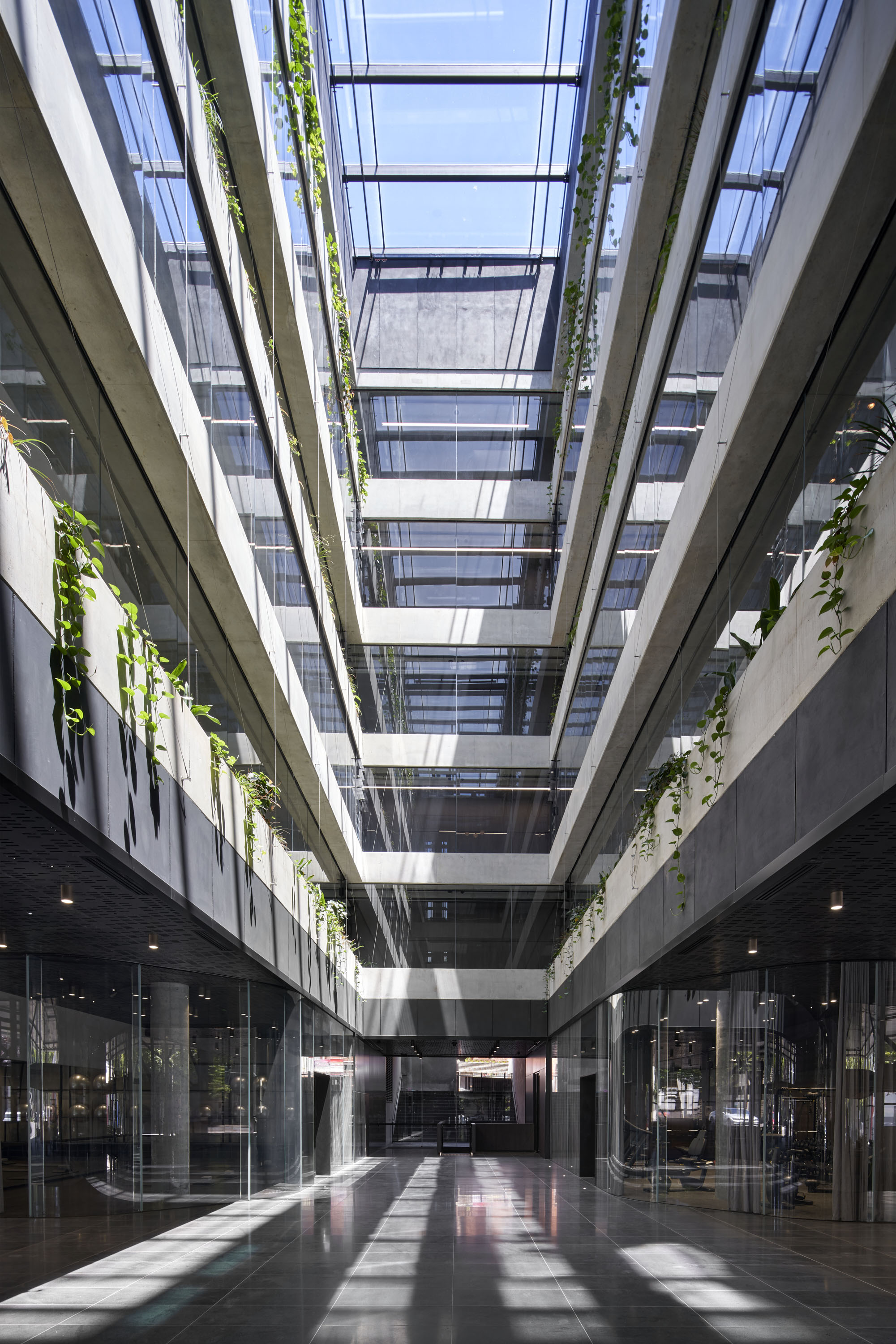
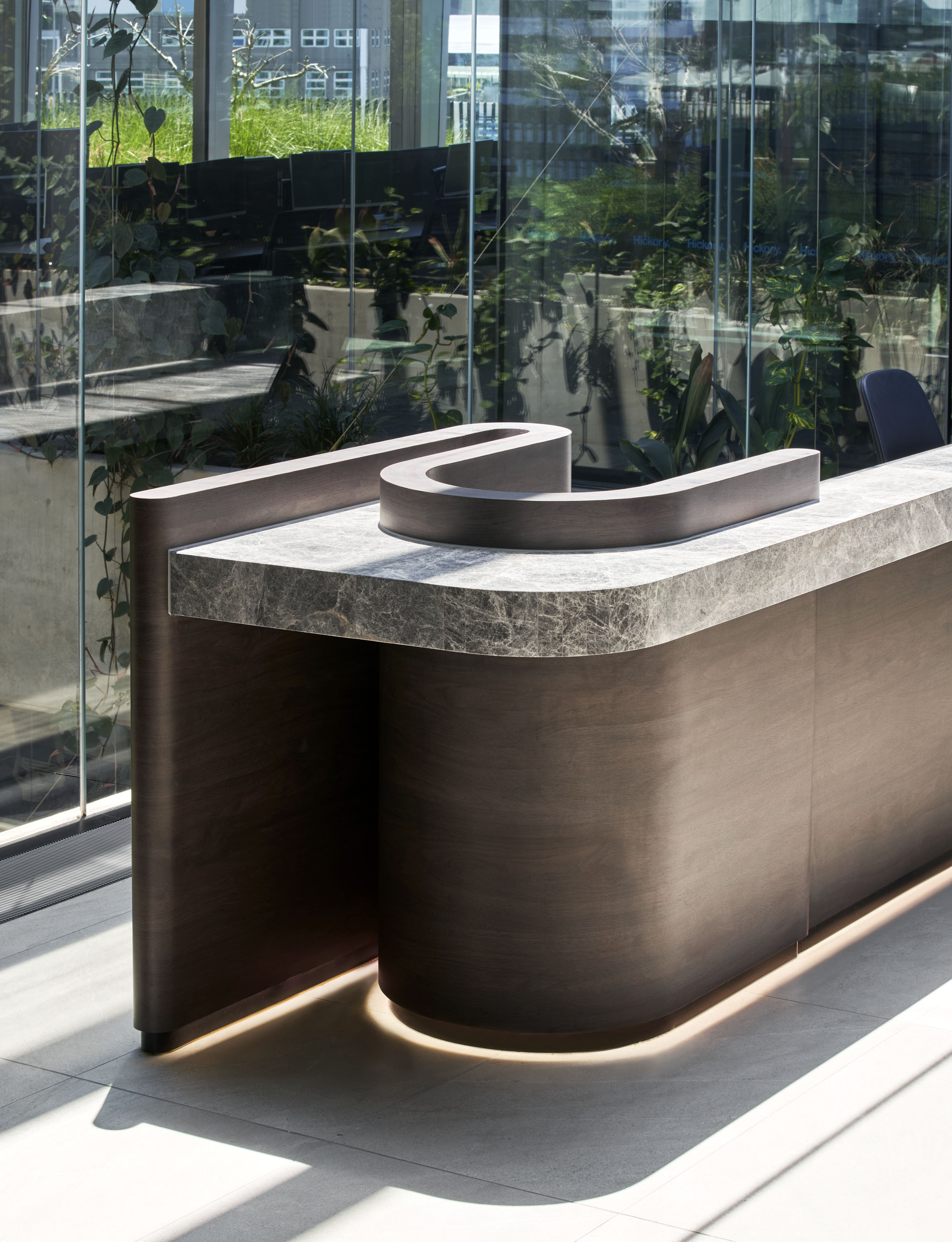
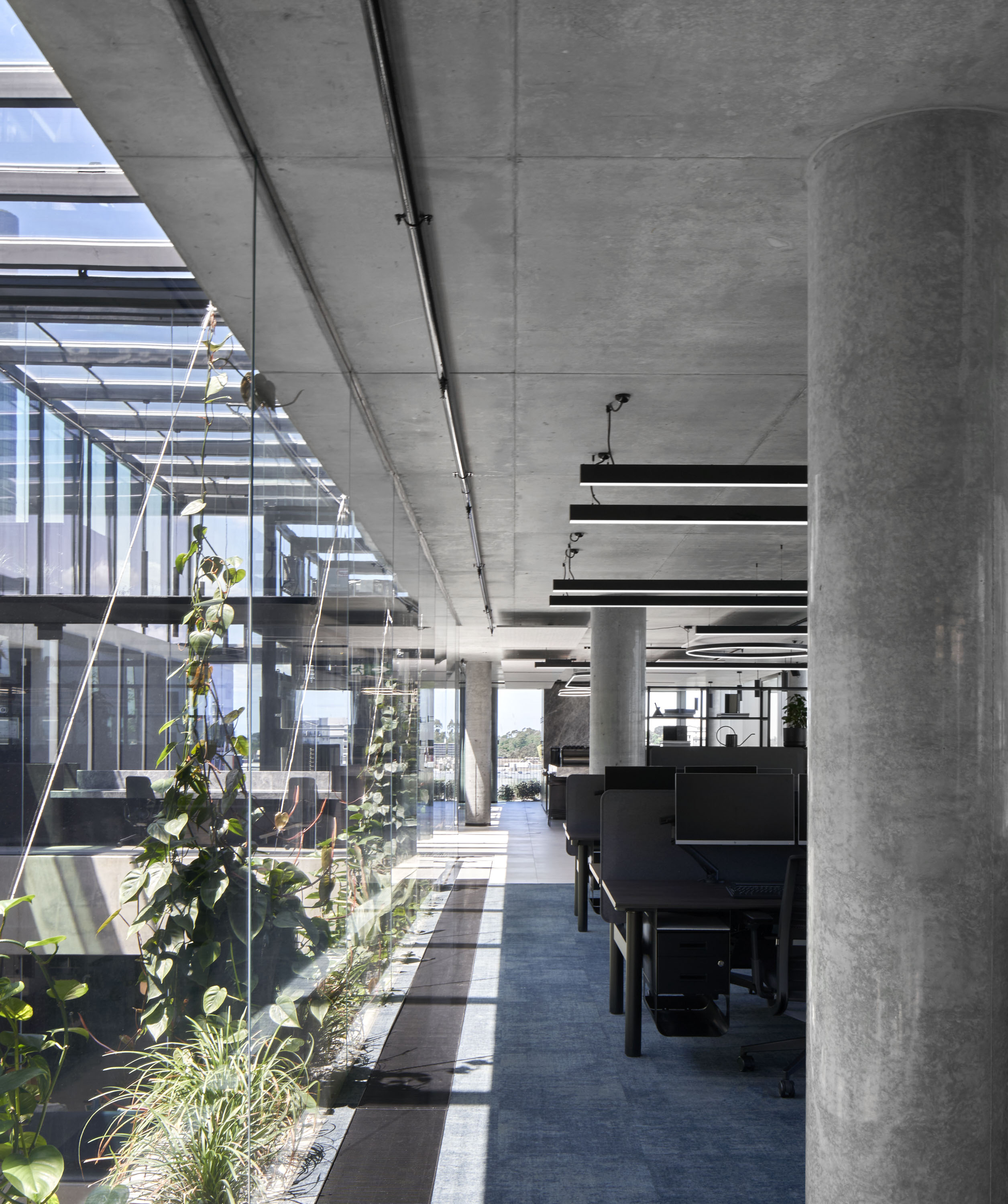
Two building forms are split by a lush and open central atrium – the building’s metabolic heart; a place that engages the senses. This is where the action happens. In this space we find a dense and energetic overlap of movement, texture and functionality. Major circulation routes are clustered here, along with vertical oxygenated plants, informal meeting spaces, transparent bridges and visual connectivity between tenancies. It is a vehicle for driving the building’s passive ventilation and night purging strategy, and is also the point at which the building converses with the street, inviting the community and the public into its visceral chasm.
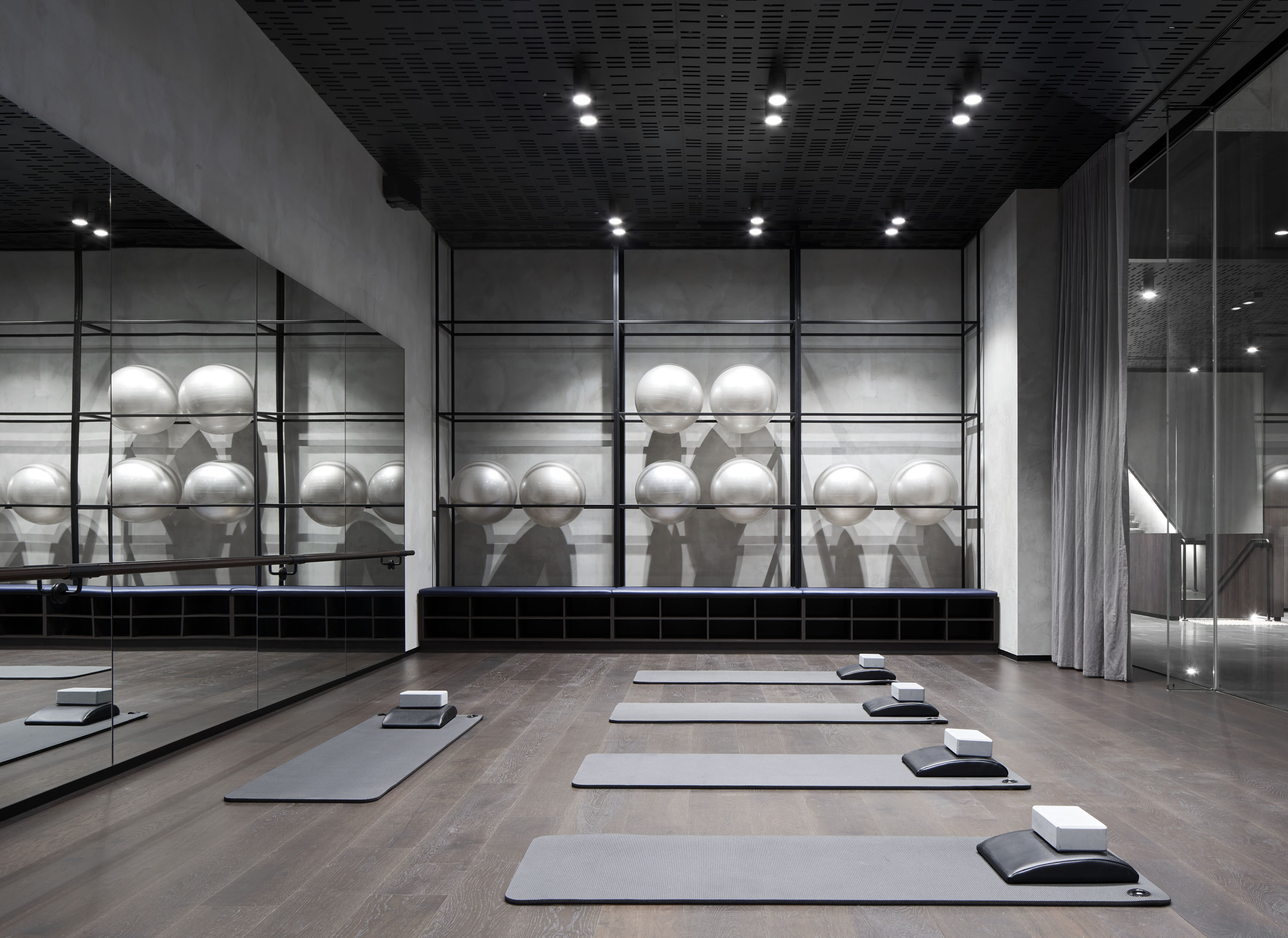
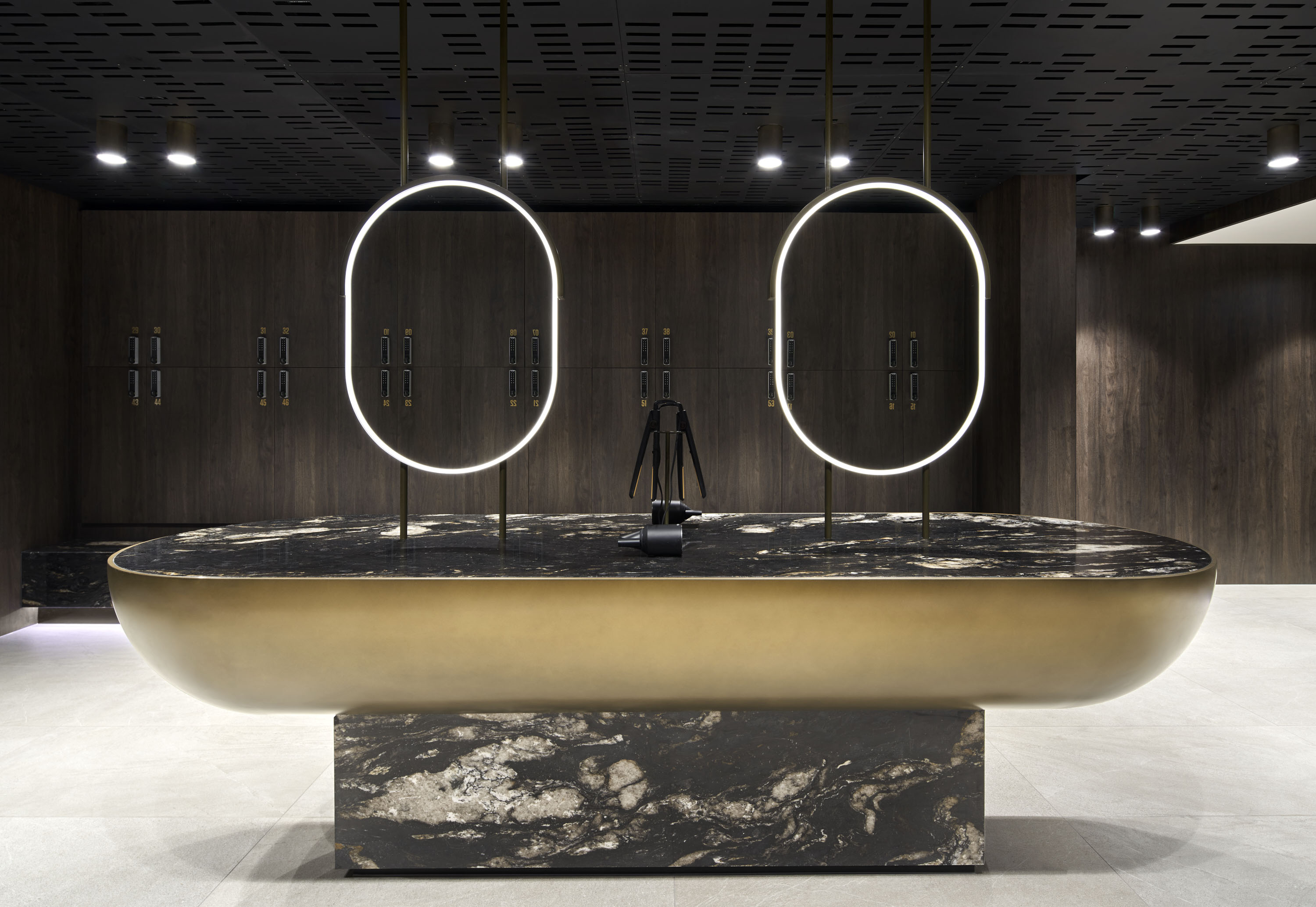
The building’s non-office function is its real success and the point at which it seeks to throw out all of our current preconceptions of the office building stereotype. Public and community functions are peppered all throughout the development from food truck vans, market stalls and wellness facilities at ground level, to community garden terraces mid-way up the building with open air cinemas, bars and restaurants on the roof. This is a building that continues to pulsate long after the last office worker has gone home.
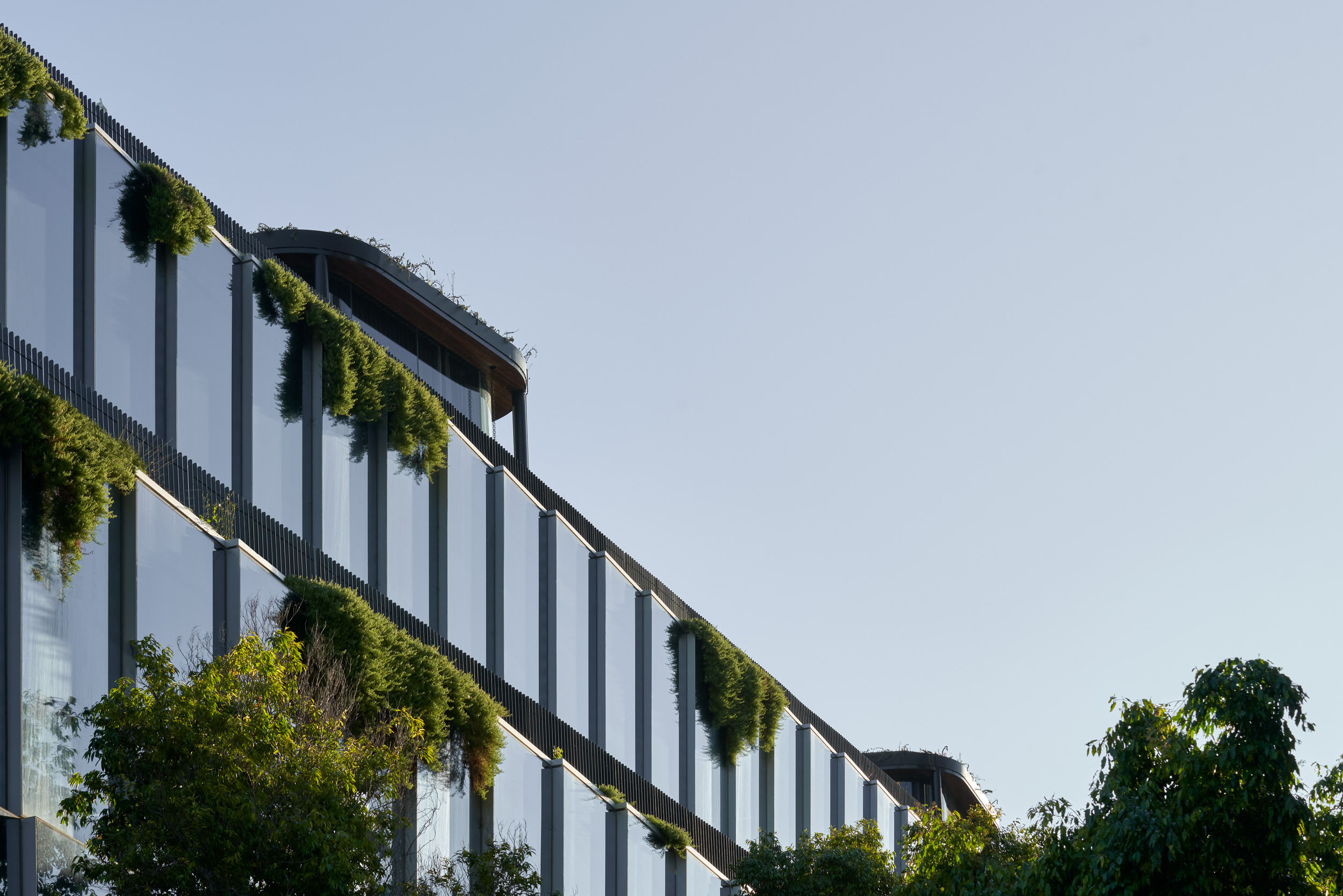
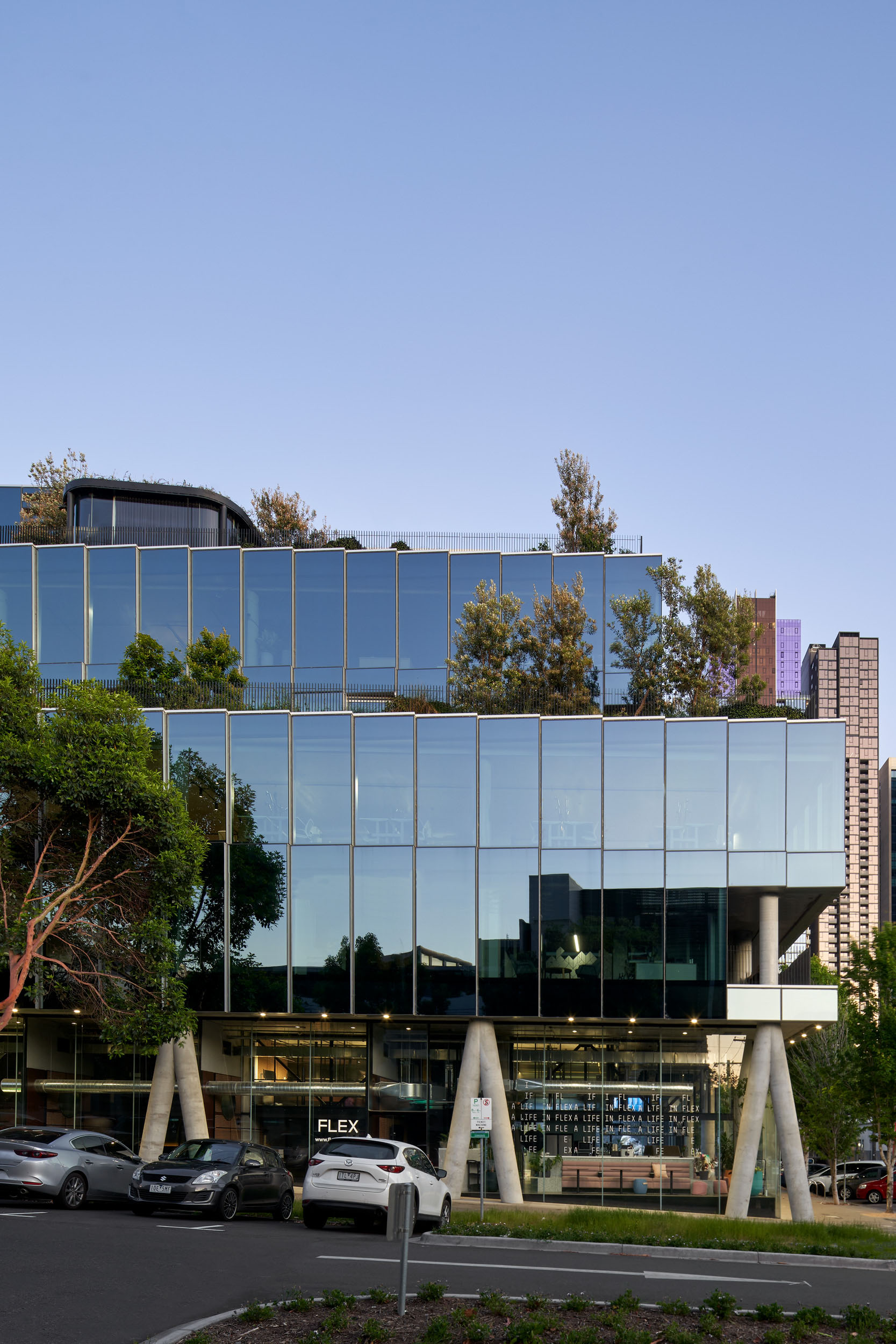
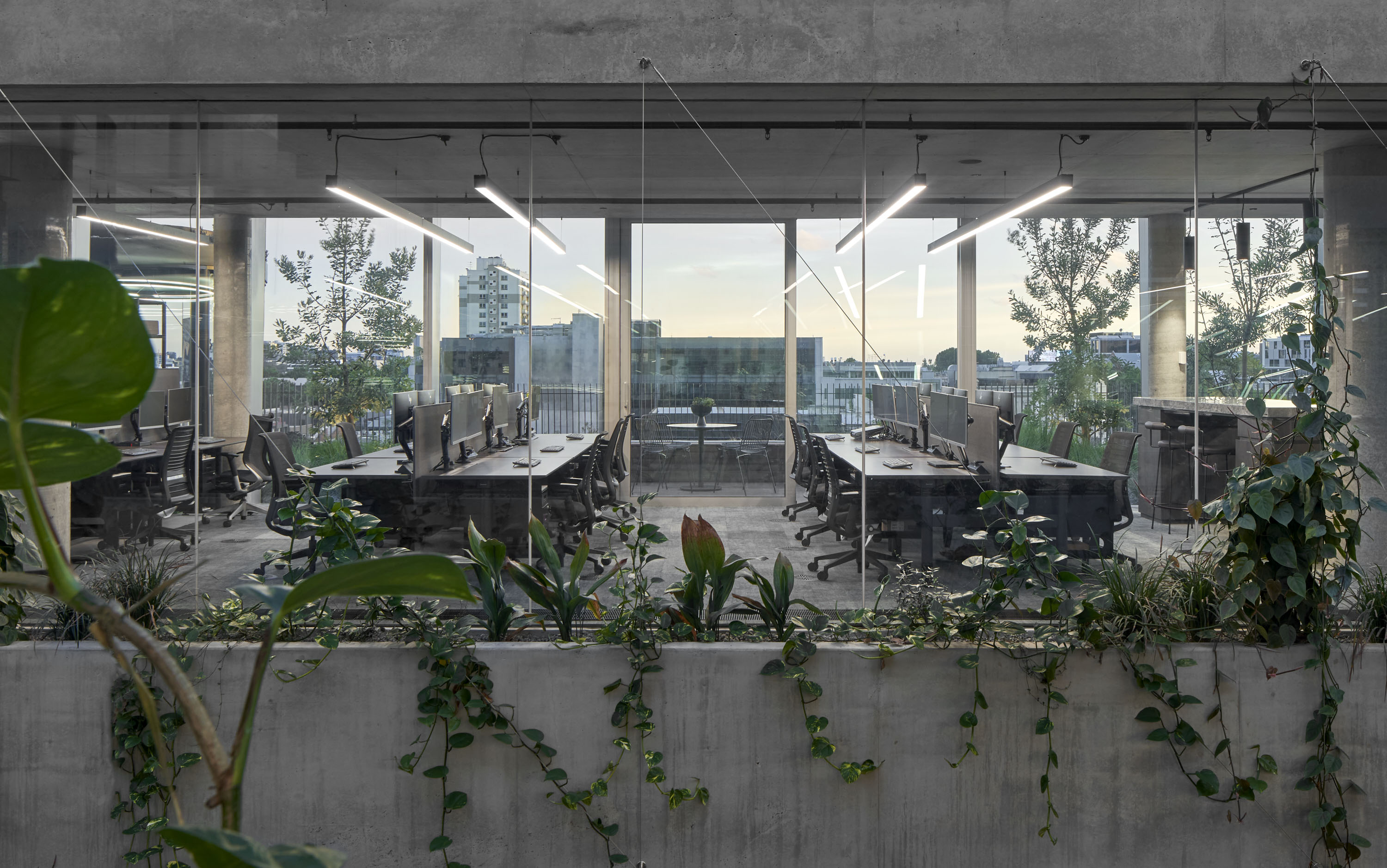
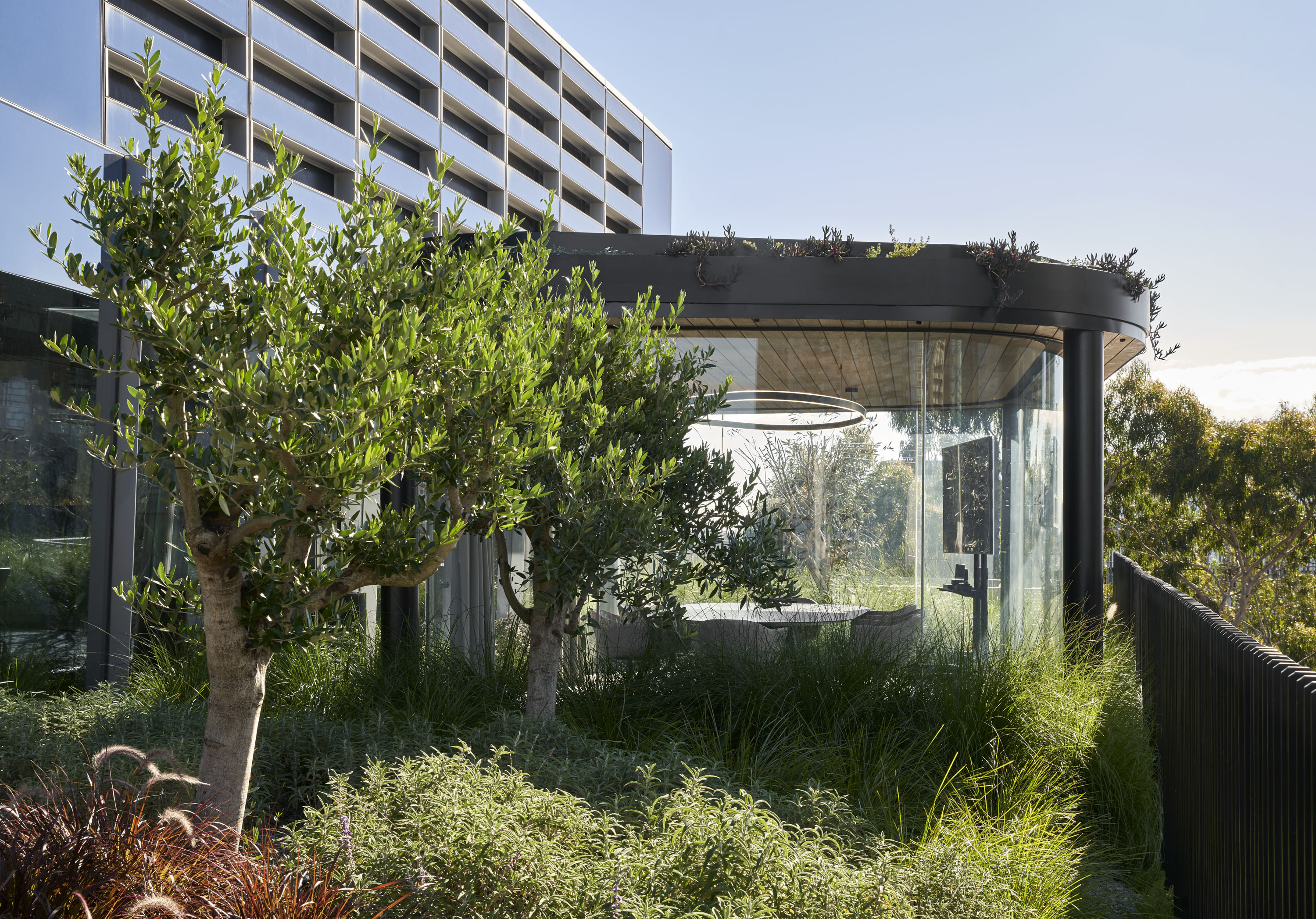
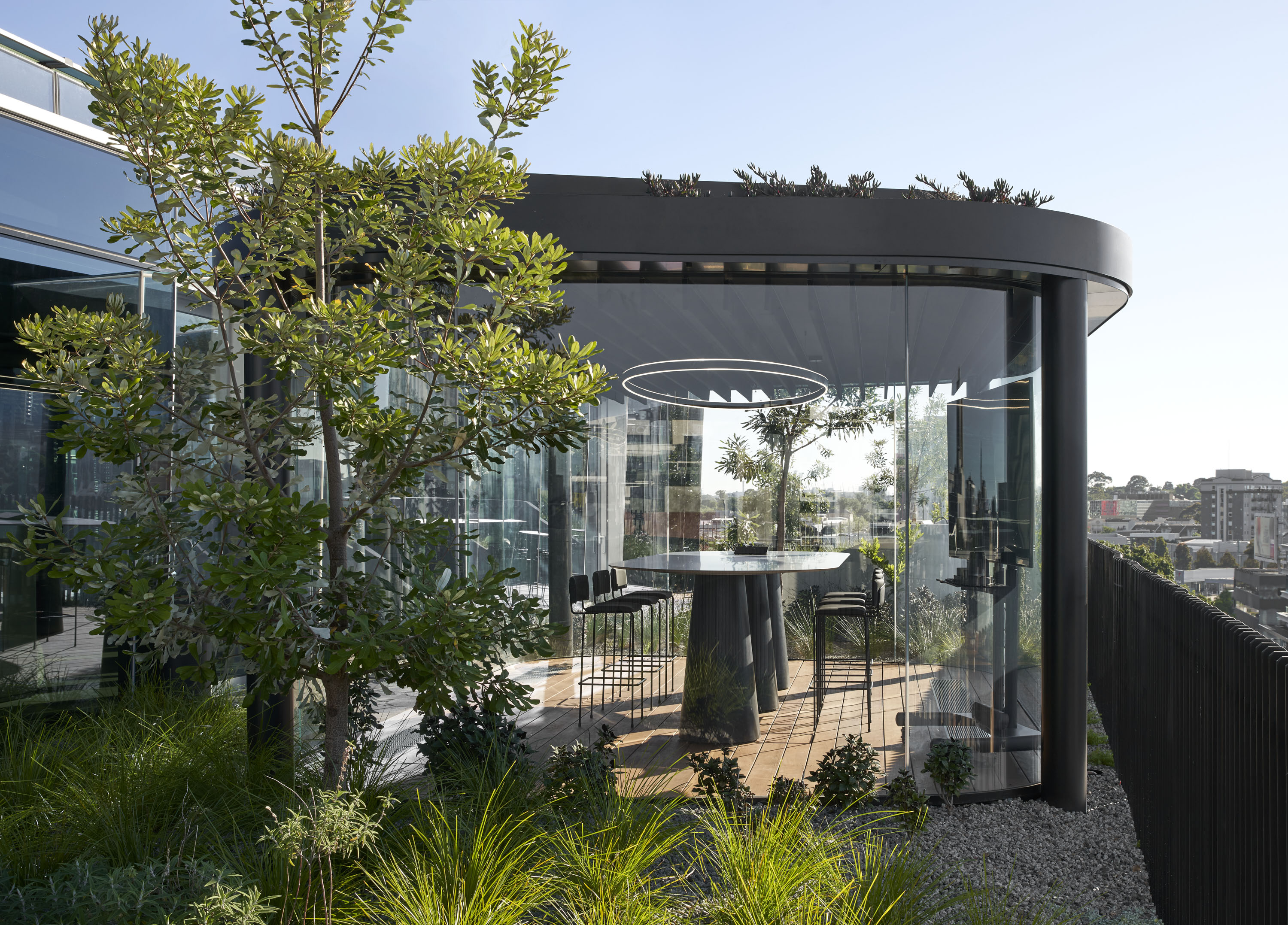
From the central spine, the two main forms of the building are hinged, each extruded box cascades towards the centre which provides a unique opportunity for the future office prototype by offering extensive external spaces as the most valuable asset of the office tenancies. Not only do these terraces provide visual and spatial relief to the indoor office spaces, but they offer tenants with a flexible way of working by breaking down the barrier between indoor and outdoor, and the distinction between productive and non-productive space. These external spaces invite the capacity for onsite food production and community gardens and foster tempered daylight and oxygenated air into the building.
The structure sits close to the façade line, allowing a flexibility of internal planning possibilities – unlimited options arise for subdivisibility and the capacity for additional internal staircases between floors without compromise to the structure and services. In this sense, the building can really be anything, and do anything which creates a unique proposition for any future developer in the commercial market.