


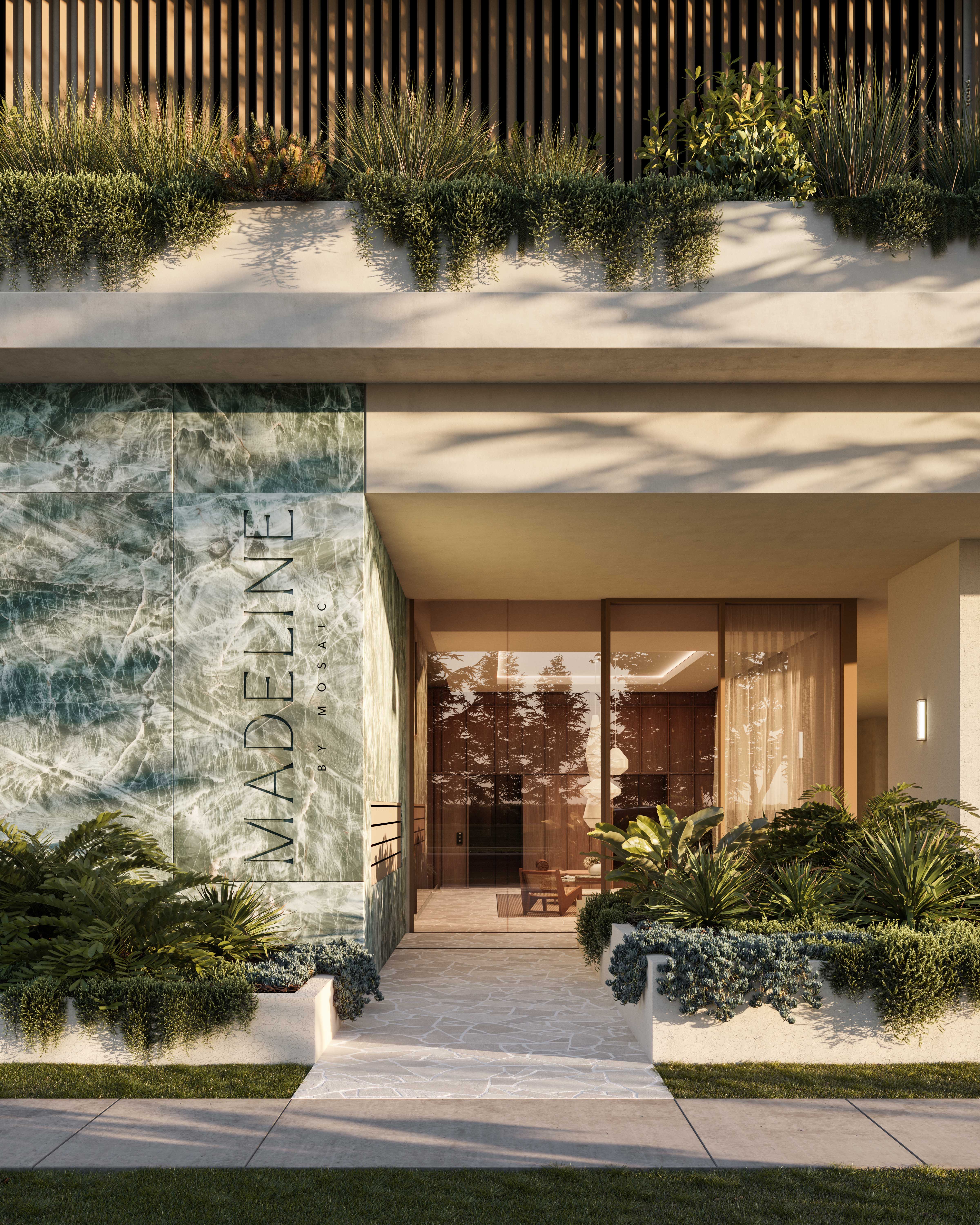






Embedded within an Australian coastal condition, Madeleine begins with a quiet refusal, the refusal of excess, of spectacle, of anything that does not belong. It does not arrive loudly. It settles instead, as though it had always been there, shaped by salt, by light, by the long memory of the shoreline.
The building reconsiders the so-called Australian dream, not as a detached object on land, but as a way of living with it. Here, dwelling is less about possession and more about alignment of body to climate, of material to place, of routine to the slow and persistent rhythms of the coast. What emerges is not an apartment building in the conventional sense, but a vertical extension of a distinctly Australian way of inhabiting space.
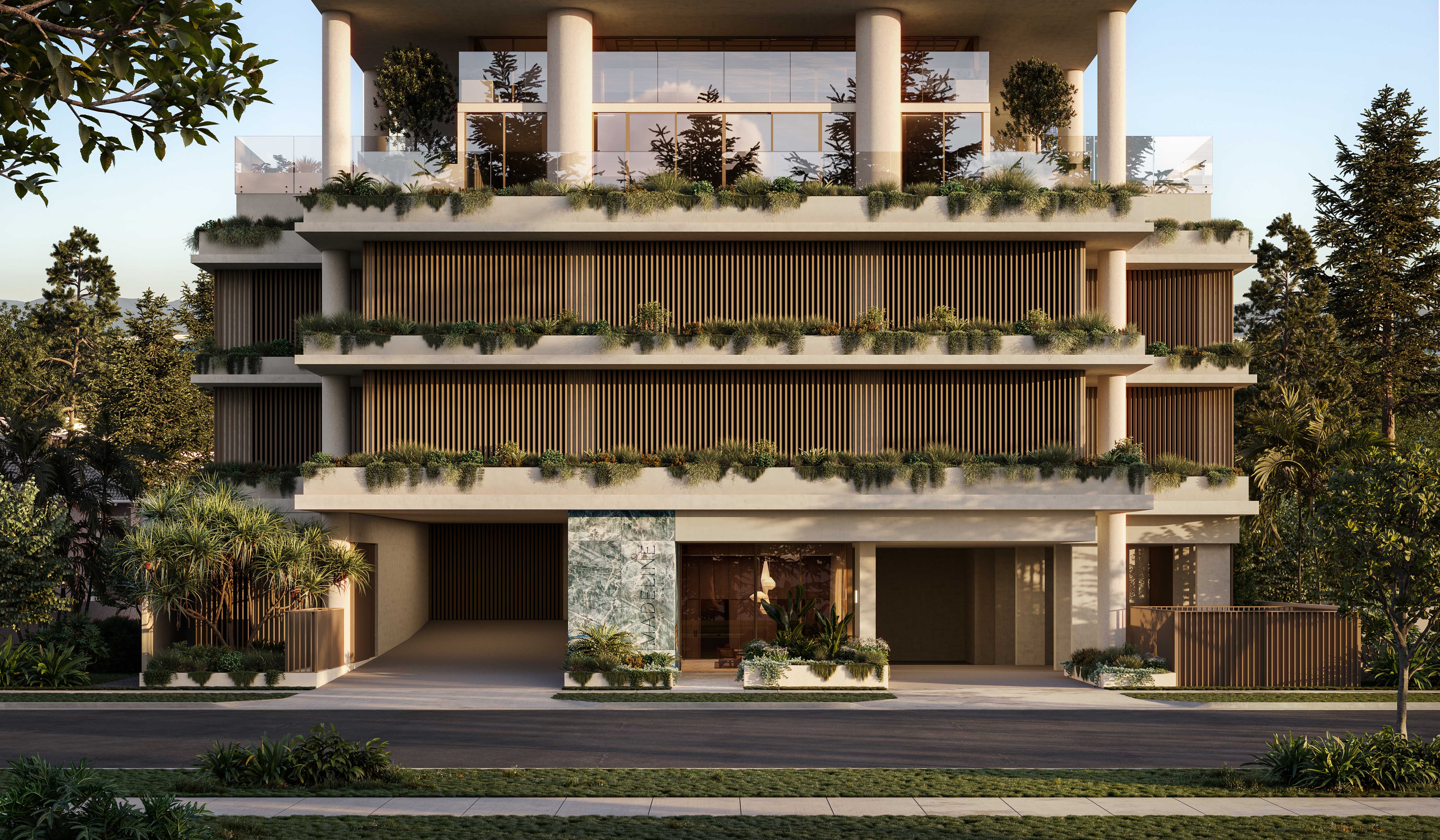
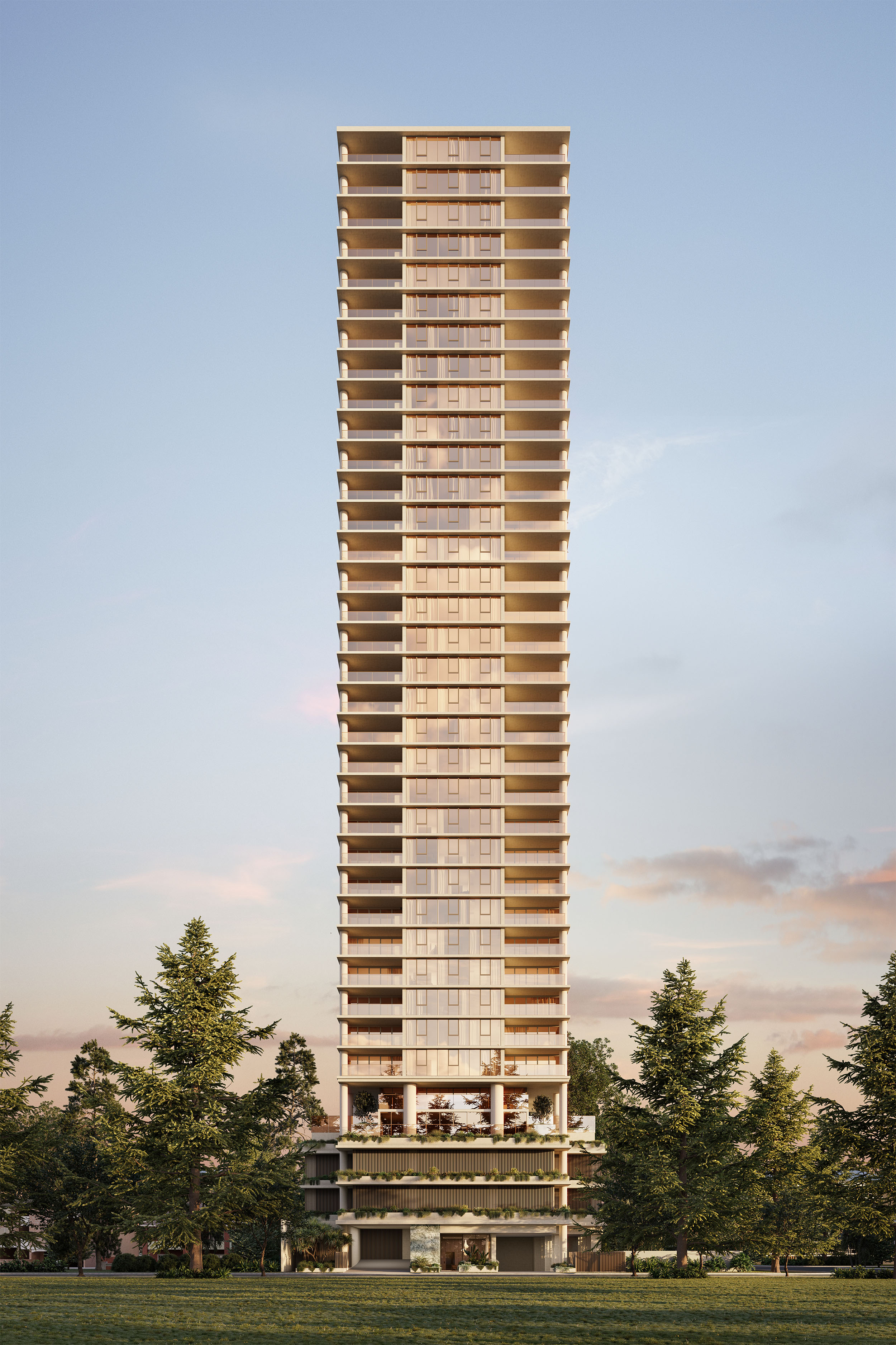
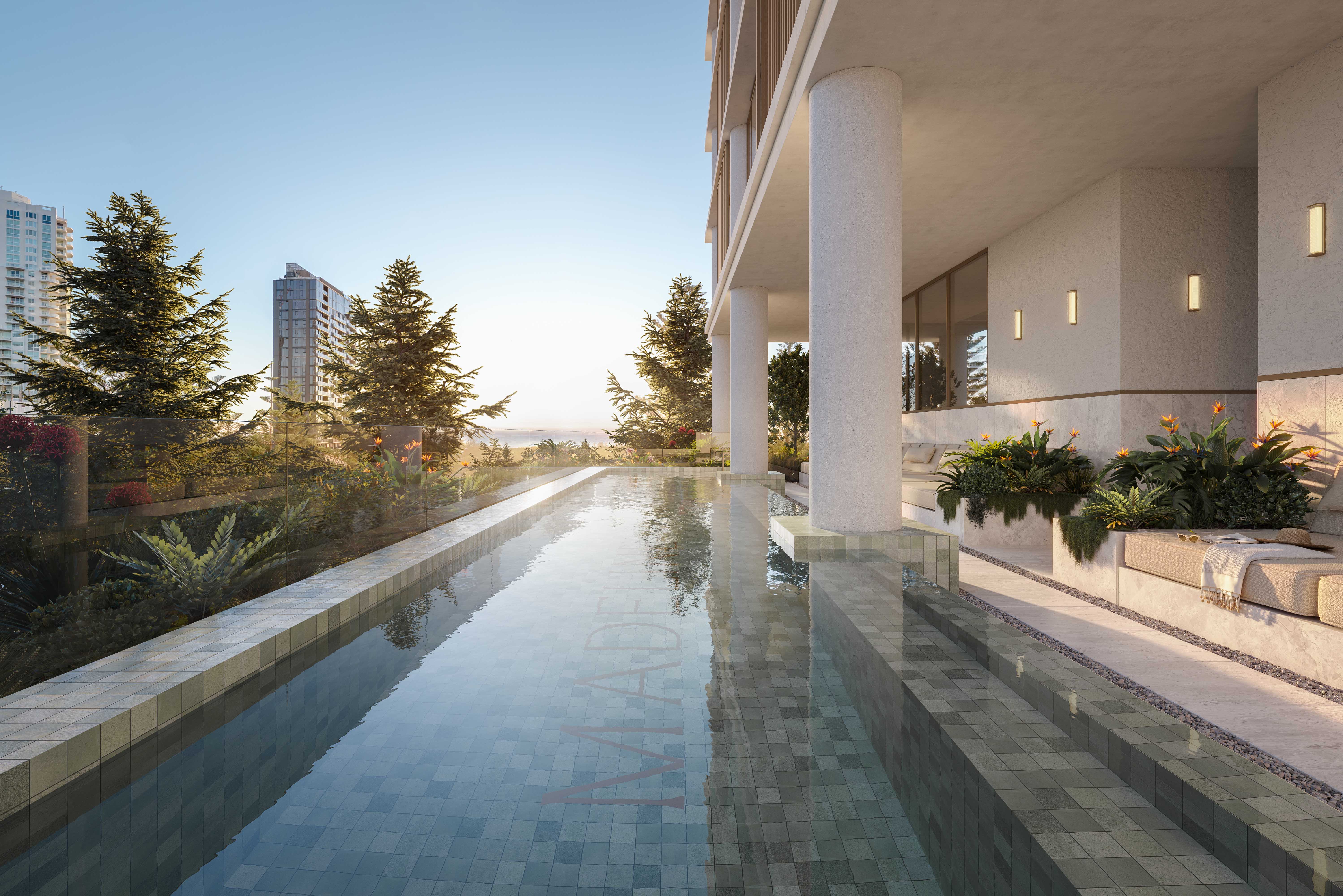
There is a kind of honesty to the architecture that resists ornament. Concrete is left to be concrete, sandblasted, expressed, quietly bearing the marks of its making. Timber, where it appears, carries with it a familiarity, a warmth that feels inherited rather than applied. Glass is not spectacle but aperture, a calibrated threshold between inside and out, between retreat and exposure. Each material is asked simply to be itself, and in doing so, it participates in a larger, more legible whole. The form follows this same disposition. It is restrained, almost indifferent to fashion. Planes extend, edges align, and deep terraces carve out a consistent spatial rhythm, one that privileges shade, breeze, and the long, oblique views toward the ocean. These terraces are not incidental. They are the architecture’s primary gesture. Life spills into them. Doors remain open longer than they are closed. The boundary between interior and exterior becomes less a line and more a condition, porous, negotiable, always in flux.
There is, too, a subtle awareness of the building’s position within a longer continuum. Long before its construction, this land was understood through patterns of movement, of gathering, of careful use. That sensibility, of living with rather than upon, lingers here, translated into passive environmental strategies and a landscape that does not decorate but participates. Air moves through the building as it would through a stand of trees. Light is filtered, not resisted. Planting rises from the ground plane and continues upward, softening edges and returning something of the site’s original texture.
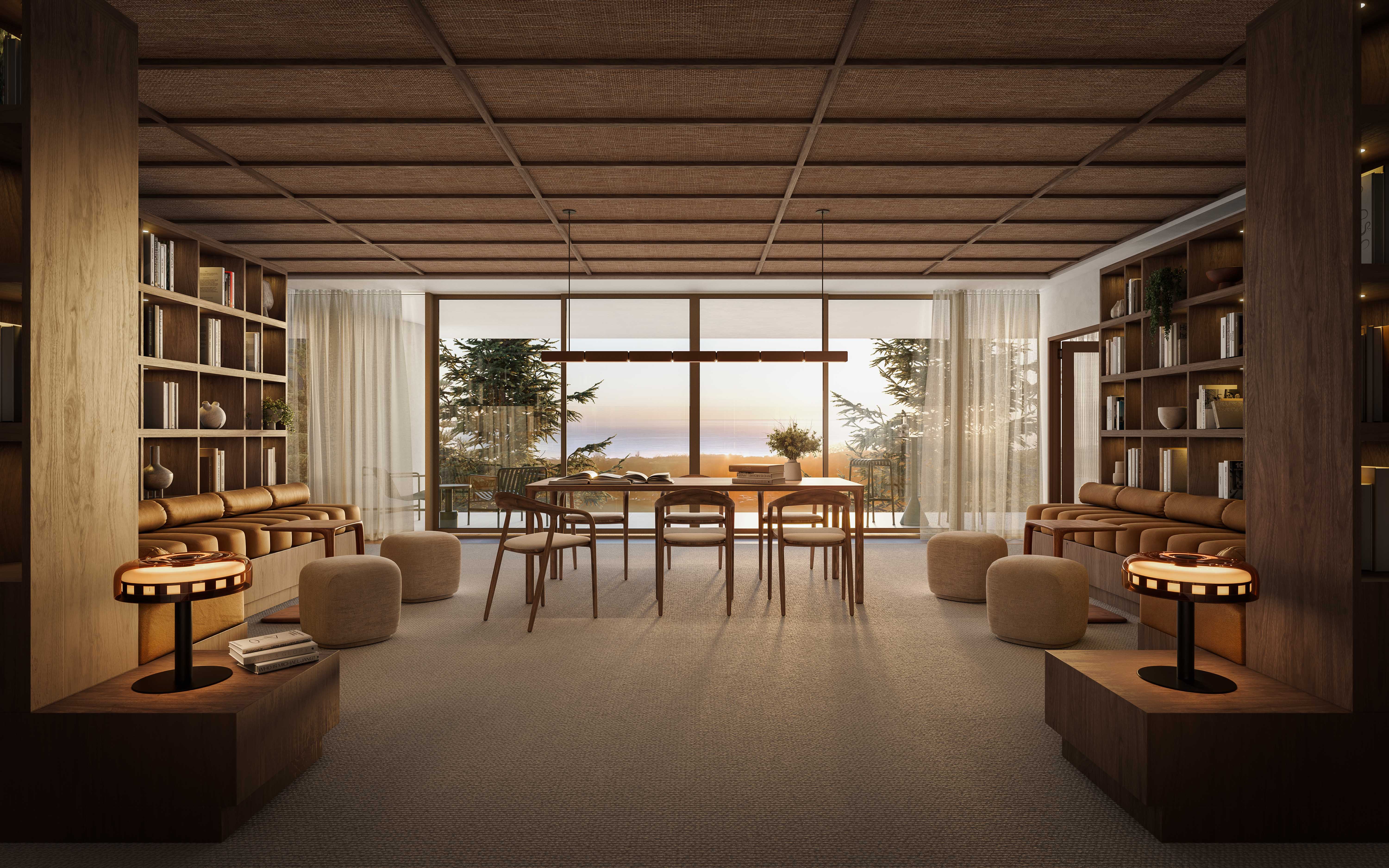
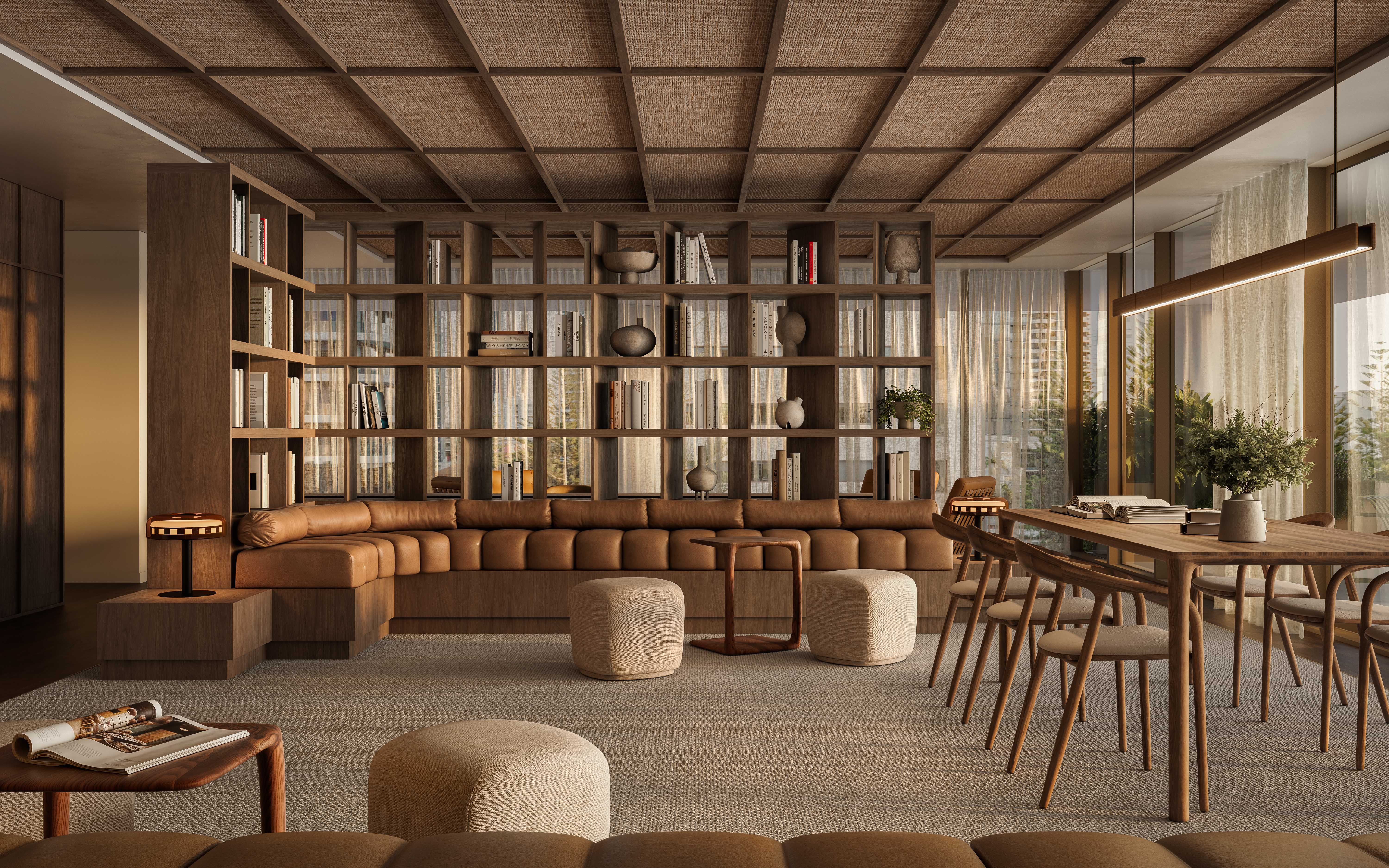
Communal space is treated with the same restraint. It is not prescribed too heavily, nor is it overly designed. Instead, it offers a framework, places to sit, to pass through, to encounter others without obligation. The podium becomes less an amenity deck and more an elevated ground, where the routines of daily life, swimming, resting, conversation, occur without ceremony.
In this way, Madeleine avoids the trap of over-definition. It does not insist on how it should be lived in. It simply creates the conditions for living well, light that is neither harsh nor absent, air that moves without effort, materials that age without apology. And perhaps that is its most distinct quality. It does not attempt to be new. It attempts to be right.